מדריך למיין היהודית
עם כל כך הרבה אפשרויות, קשה לדעת מאיפה להתחיל! זו הסיבה שיצרנו את המדריך למיין היהודי - כדי לעזור לכם למצוא ארגונים יהודיים, תוכניות ומידע על חגים שיכולים להדריך אתכם בדרך להתחברות לקהילה שלכם.
עדיין לא רשומים? אם ברצונכם להיכלל, אנא לחצו על הכפתור למטה!
Congregations
Adas Yoshuron offers an array of religious services and experiences designed to support the needs and interests of our full- and part-time residents: young families, mature adults, singles, and couples, with backgrounds ranging from Reform to Orthodox and everything in between. We honor the diversity of our community, celebrating same-sex and interfaith marriages in our sanctuary and integrating spouses and partners who are not Jewish into all aspects of synagogue life.
Rabbi: Lorin Troderman | 207-594-4523
www.adasyoshuron.org
Beth Israel Congregation is an inclusive Reform synagogue and vibrant center of worship, learning, culture, and community, connecting Judaism to modern life. Rooted in tradition while evolving with relevance, it welcomes diverse interpretations of Torah, texts, and Jewish practices. As a longstanding hub of Jewish life in the Mid-coast, Beth Israel is a nourishing place where people learn, question, observe, and connect with God and each other.
Rabbi: Lisa Vinikoor | 207-443-4606 www.bethisraelbath.org
Beth Israel Congregation is a modern Conservative, egalitarian synagogue where people of all genders actively participate in religious, social, and administrative life. Founded over 100 years ago, it honors the traditions of its founding families while welcoming members from other states and diverse backgrounds. With many interfaith families, Beth Israel offers religious school, adult education, and community programs. Located in Waterville, it partners with nearby Colby College to support Jewish learning and engagement.
Rabbi: Rachel Isaacs | 802-738-0853
www.behisraelwaterville.org
Chabad of Bangor is a Jewish community center and Chabad-Lubavitch house of worship in Bangor, Maine offering a welcoming space for prayer, study, holiday celebrations, and community connection. It serves Jews of all backgrounds with traditional services, Torah learning, and cultural events, and aims to foster spiritual growth and a sense of belonging within the local Jewish community. The center is led by Chabad emissaries and is part of the global Chabad network dedicated to Jewish outreach and education.
Rabbi: Chaim Wilansky
www.chabadbangor.com
Chabad of Brunswick, Maine, serves Bowdoin College Jewish students and the wider community, offering meaning, joy, and spirituality in everyday life. We teach these values in a warm, nurturing environment where people grow together while enjoying life and Judaism. Chabad welcomes everyone, regardless of background or observance. Explore our programs, celebrations, and events, and experience our warmth and wisdom. At Chabad, every Jew is family, and our Chabad House is your “home away from home.”
Rabbi: Shmuel Lefkowitz | 207-370-4522
www.jewishbrunswick.com
We are a vibrant, egalitarian, and progressive Jewish community, welcoming Jews of all backgrounds, their families, partners, and those seeking to live Jewishly. We encourage each member to actively participate in synagogue life according to their interests and abilities. Our community empowers members to lead joyful, meaningful lives through prayer, learning, friendship, and engagement in Tikkun Olam—the Jewish commitment to repairing and improving the world—fostering connection, growth, and a shared sense of purpose within a supportive, inclusive environment.
Rabbi: Bill Siemers | 207-945-3433
www.cbisrael.org
Congregation Beth Israel is an Orthodox synagogue in Old Orchard Beach. It is one of the oldest synagogues in Maine. Shabbat services are held all year.
207-974-2973 | www.cbisrael.me
Congregation Shaarey Tphiloh embraces an Orthodoxy that is open and inclusive. We are dedicated to the principles of halakha (Jewish law) and Jewish tradition, and believe that these teachings will lead us on the path of righteousness and toward a spiritual connection to God. We are “modern” Orthodox in the sense that we believe that the modern world should inform our religious experience and enhance our understanding of the laws and traditions of Judaism. We are “open” in the sense that we emphasize that we are responsible for serving the larger community of the Jewish people and the State of Israel. Our members believe that they have a responsibility to work to improve the lives of the people in the community around us as well as the lot of all of humanity.
President: Dr. Natan Kahn | 207-773-0693
www.mainesynagogue.org
Etz Chaim is an inclusive synagogue serving Portland and Southern Maine, honoring both traditional and liberal Jewish practice. Many services are conducted in Hebrew, while others are in English, offering a welcoming worship experience for all. We especially welcome interfaith, multicultural, and non-traditional individuals and families seeking meaningful connection to Judaism. Committed to worship, learning, and service, Etz Chaim strives to be a “tree of life,” fostering community, justice, and peace in the spirit of Jewish tradition.
Rabbi: Gary Berenson | 207-773-2339
www.etzchaim-portland.org
Temple Beth El (TBE) is a small, vibrant synagogue in Maine’s capital city, Augusta. We are the only Reform Jewish congregation in Central Maine and serve as the center of Jewish activity for roughly 115 households living within a 50+ mile radius of Augusta, as well as for dozens of other non-member Jews.
Rabbi: Erica Asch | 207-622-7450
www.bethelaugusta.org
Established in 1947, Temple Beth El is a leading regional center of Conservative Judaism north of Boston, serving approximately 300 member families with an active religious school, Kadima Beth El. A pioneer in social action and gender equality, the Temple advanced civil rights under Rabbi Harry Sky and installed one of the nation’s first female congregational presidents in the 1970s. With Rabbi Carolyn Braun’s leadership beginning in 1995, Temple Beth El became the largest Conservative synagogue led by a woman and continues to champion progressive Judaism today.
Rabbi: Rachel Simmons | 207-774-2649 www.tbemaine.org
TSSC serves members of the Central Maine Jewish community of Lewiston/Auburn and outlying towns. Our synagogue was built in 1982 following the merger of Congregation Beth Jacob and the Lewiston Jewish Community Center. For many years, we were affiliated with the Conservative movement. However, since 2004 we have been an independent, egalitarian congregation, welcoming all Jews and all levels of Jewish observance. Our mission is to foster a strong Jewish identity and an active Jewish community. Current membership includes 95 families.
Rabbi: Sruli Dresdner | 207-786-4201
www.templeshalomauburn.org
ארגונים
The Center for Small Town Jewish Life supports Jewish individuals and families living in rural and small-town communities across Maine. Its mission is to nurture Jewish identity, connection, and engagement, providing opportunities for worship, learning, celebration, and social connection. Through programs, educational resources, and community-building events, the Center ensures that Jews outside major urban areas can maintain meaningful ties to Jewish life and tradition, fostering inclusion, culture, and a sense of belonging across Maine’s diverse communities.
Documenting Maine Jewry is a community-based history project providing information on Jewish citizens of Maine through a genealogical and historical resource reflecting the Jewish traditions of memory, remembrance, and inter-generational learning. In undertaking this task, the DMJ is preserving Jewish traditions and strands in our Maine history.
The Holocaust and Human Rights Center of Maine educates the public about the Holocaust while promoting human rights, tolerance, and social justice. Through exhibits, educational programs, survivor testimonies, and community events, the Center encourages reflection on the lessons of history and inspires action against prejudice, discrimination, and hatred. It serves as a vital resource for students, educators, and the public, fostering awareness, empathy, and responsibility, ensuring that the stories of the past guide a more just and compassionate future.

The Maine Jewish Film Festival’s mission is to provide a forum for the presentation of films to enrich, educate and entertain a diverse community about the global Jewish experience. In recent years, waves of immigration and shifting demographics have reshaped many parts of our state. MJFF regards these changes as an opportunity to create programming and events that celebrate and build community within an increasingly diverse population. Through new outreach initiatives and strategic partnerships, they will continue to expand their reach and remain at the vanguard of Maine’s cultural community.
P.O. Box 7465, Portland, ME 04112
207-523-3422
Maine Jewish Museum, located in a restored 1921 synagogue, celebrates and honors the contributions and diversity of Maine’s Jewish immigrants in the context of the American experience. Through exhibits, programming, and dialogue, the museum seeks to build bridges of appreciation and understanding with people of all backgrounds.
267 Congress Street, Portland, ME 04101
The Portland Jewish Funeral Home, owned by The Portland Chevra Kadisha is a non-profit organization
that has been serving the surrounding Jewish population for over 100 years. We are a licensed funeral home and proud member of The Funeral Consumers Alliance, managed by a dedicated group of Jews and a licensed funeral director. The Jewish Funeral Home arranges funeral services from the Levey Chapel, or from any synagogue or temple.
471 Deering Ave, Portland, ME 04103
207-774-3733
The Beth Israel Waterville Mikvah is available for free for members of partner organizations; for everyone else it is $250 per use. To schedule a time to use the Mikvah visit their website to fill out a form.
Resources
The Beth Israel Waterville Mikvah is available for free for members of partner organizations; for everyone else it is $250 per use. To schedule a time to use the Mikvah visit their website to fill out a form.
השכלה
The Hebrew School at Beth Israel Congregation in Bath, Maine provides meaningful, lasting Jewish education to Children and their families. Centra to meeting that goal are both a compassionate, experienced faculty and a flexible curriculum designed to accomodate students from varying backgrounds. Beth Israel Religious School believes that a Jewish rligious education should provide a positive learning environment that will leave students with a basic body of Jewish learning with pride in Jewish heritage.
Bowdoin College Hillel fosters Jewish life on campus, offering students opportunities for worship, learning, social connection, and cultural engagement. Through Shabbat dinners, holiday celebrations, educational programs, and social justice initiatives, Hillel creates a welcoming environment where students of all backgrounds can explore and express their Jewish identity while building lasting community and leadership skills.
Chavurat HaBayit is a community-driven Jewish learning program emphasizing inclusivity, collaboration, and spiritual growth. It engages participants in prayer, study, and hands-on projects, fostering Jewish identity, values, and connection across generations.
Congregation Bet Ha'am’s religious school program serves students from the toddler years through 12th grade. The school is staffed by volunteers from the community, which allows students to know their teachers as role models of Jewish life in many different contexts and which allows families to participate in programs together.
Kadima Beth El Religious School provides children with a comprehensive Jewish education, including Torah study, Jewish history, holidays, and traditions. Programs foster spiritual growth, community involvement, and a strong connection to Jewish identity.
The Jewish Law Society at the University of Southern Maine School of Law creates community for Jewish law students, offering networking, professional development, and educational programming exploring Jewish legal traditions, ethics, and social justice.
Levey Day School delivers a high-quality Jewish and secular education for children, nurturing intellectual curiosity, Jewish identity, and ethical values through comprehensive curricula, experiential learning, and community engagement.

University of Maine Hillel fosters Jewish student life on campus, providing worship, learning, social, and cultural programs. Hillel builds inclusive community, leadership, and meaningful connections to Jewish traditions and values.
Southern Maine Hillel serves students at the University of Southern Maine, University of New England, Southern Maine Community College, and Maine College of Art. At each campus, Hillel creates a safe and enriching environment for students who are interested in Jewish life.
Jewish Holiday Guide
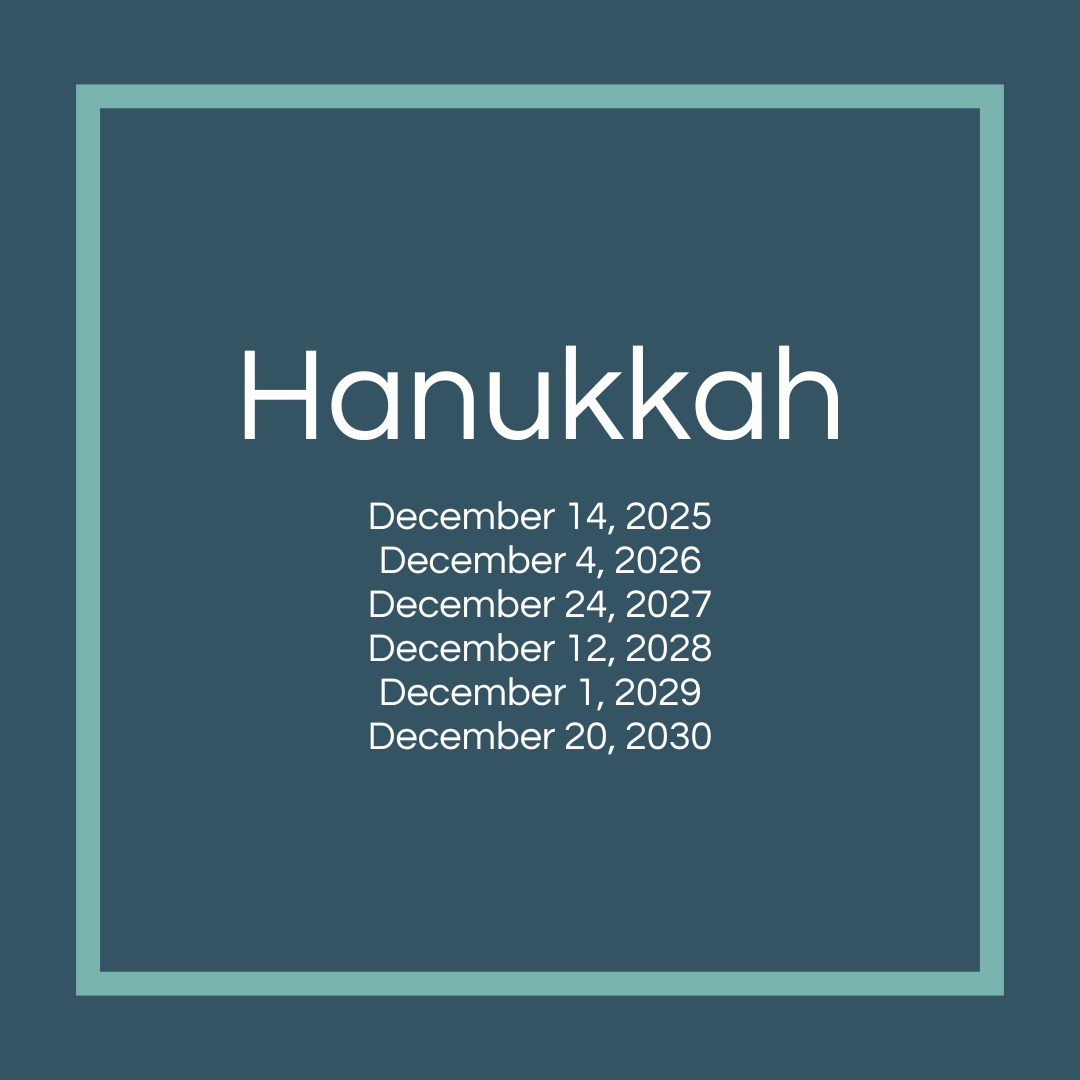
Hebrew name means “Dedication.”
What’s it about? Hanukkah is an 8-day minor holiday that commemorates the Jewish recapture and rededication of the Temple in Jerusalem in 164 BCE.
Foods: Fried foods, especially potato pancakes (latkes), and jelly doughnuts (sufganiyot).
Activities: The main observance is lighting the candles in a ceremonial lamp called a hanukkiah or Hanukkah menorah. Playing with a top called a dreidel is another fun tradition.
Symbols: Menorah, candles, dreidel, gelt.
Greeting: “Happy Hanukkah!”
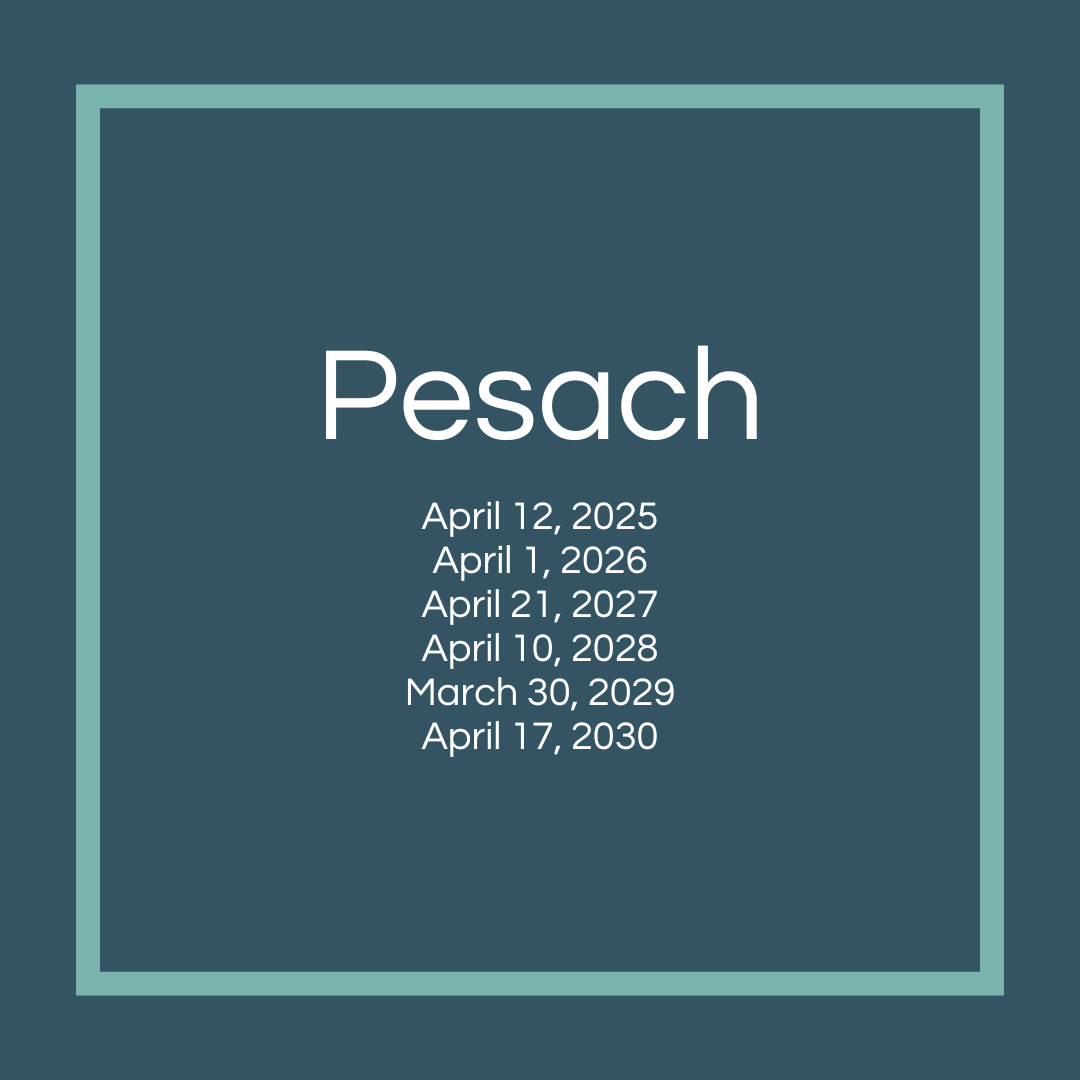
Hebrew name means “Passover,” in reference to Exodus 12:23 when the Angel of Death passed over the Israelites.
What’s it about? Passover celebrates God liberating the Israelites from Egyptian bondage. The holiday lasts eight days.
Foods: Traditionally, bread and leavened food are not eaten on Passover. Matzah, an unleavened bread, is substituted. Many food traditions spring from this, including matzah balls, gefilte fish, and sponge cake. Other popular foods are cookies and cakes made out of nuts, like macaroons.
Activities: A ritual holiday meal called a seder where the story of the Exodus from Egypt is retold. This is a major holiday, for which work would not be done at the beginning and end of the holiday, but people would work in the middle.
Symbols: Matzah, lambs (because of the historical Passover sacrifice), eggs, horseradish root, salt water.
Greeting: “Happy Pesach” or “Happy Passover.”
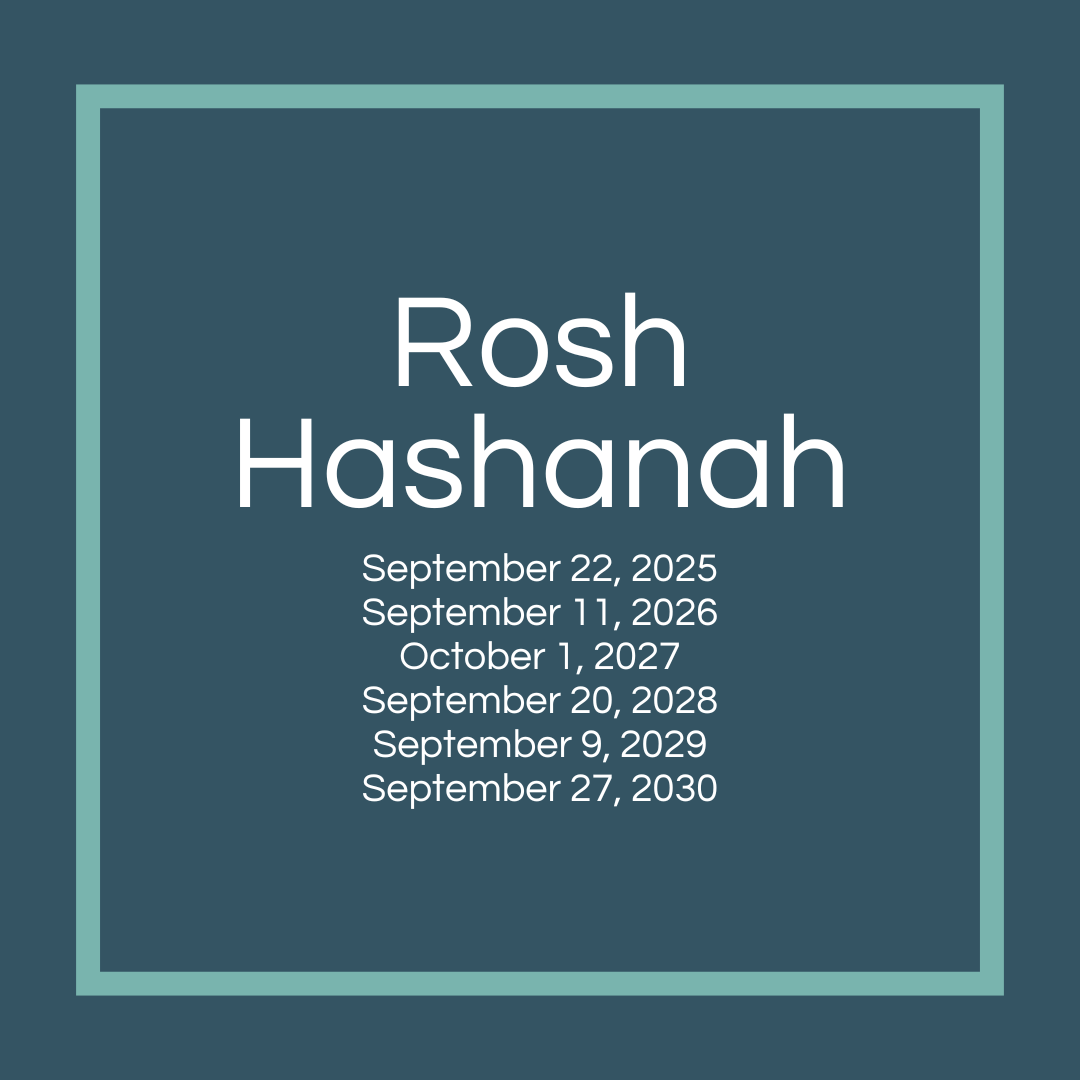
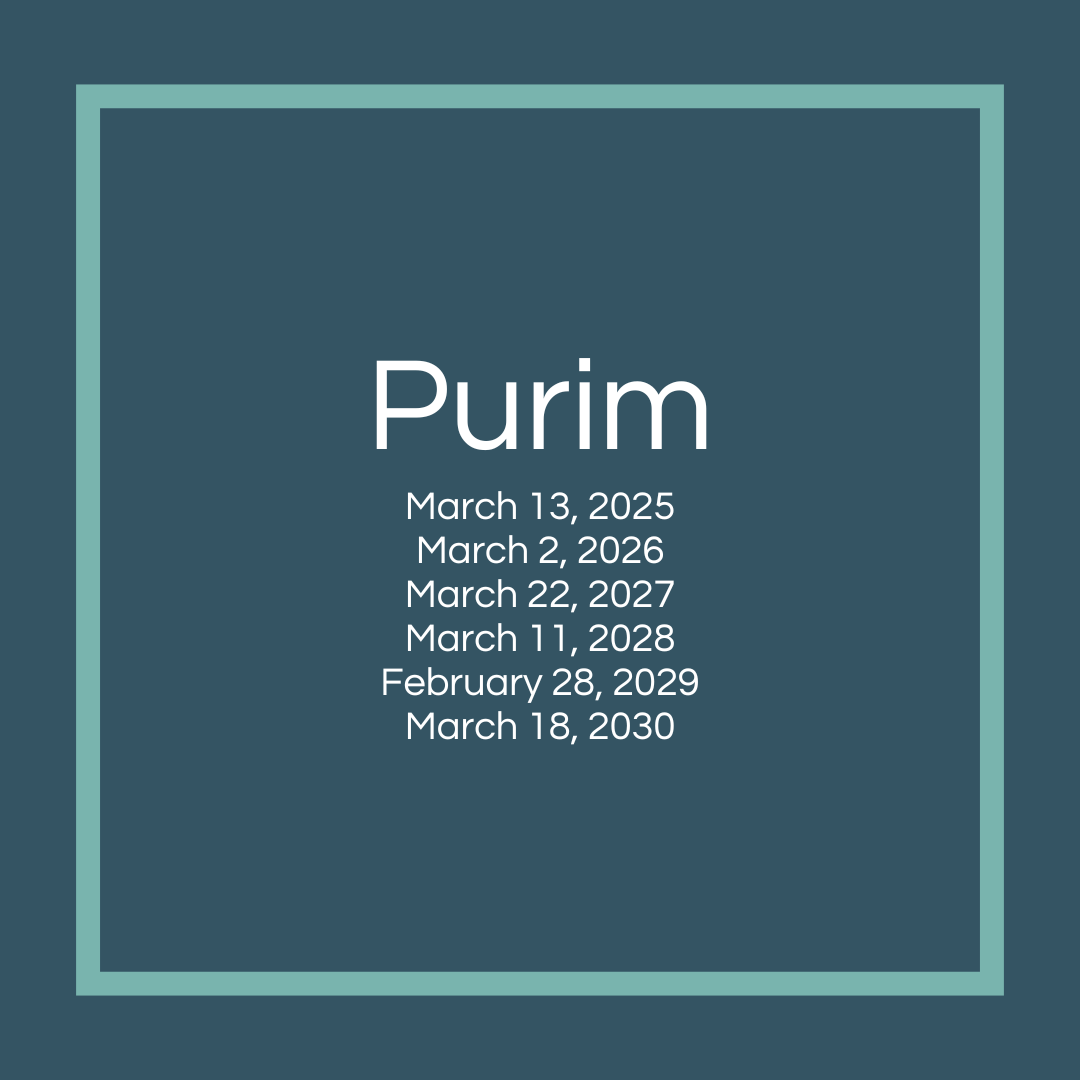
Hebrew name means “Lots”. Refers to the Book of Esther 3:7, in which the villain Haman draws lots to set the date for the Jews’ destruction.
What’s it about? Celebration of a narrow escape from genocide described in the Book of Esther.
Foods: Triangular pastries called hamantashen (Haman’s pockets), named for the bad guy in the Book of Esther. Some eat other foods with things hidden inside, like dumplings.
Activities: We read the Book of Esther, wear costumes, eat hamantashen, and use noisemakers called groggers. It’s also traditional to give money to charity, send anonymous packages of goodies to your friends (called mishloach manot or shaloch mones) and to drink alcohol. A minor holiday where work is permissable.
Symbols: Masks, costumes.
Greeting: “Purim Sameah,” which means “Happy Purim.”
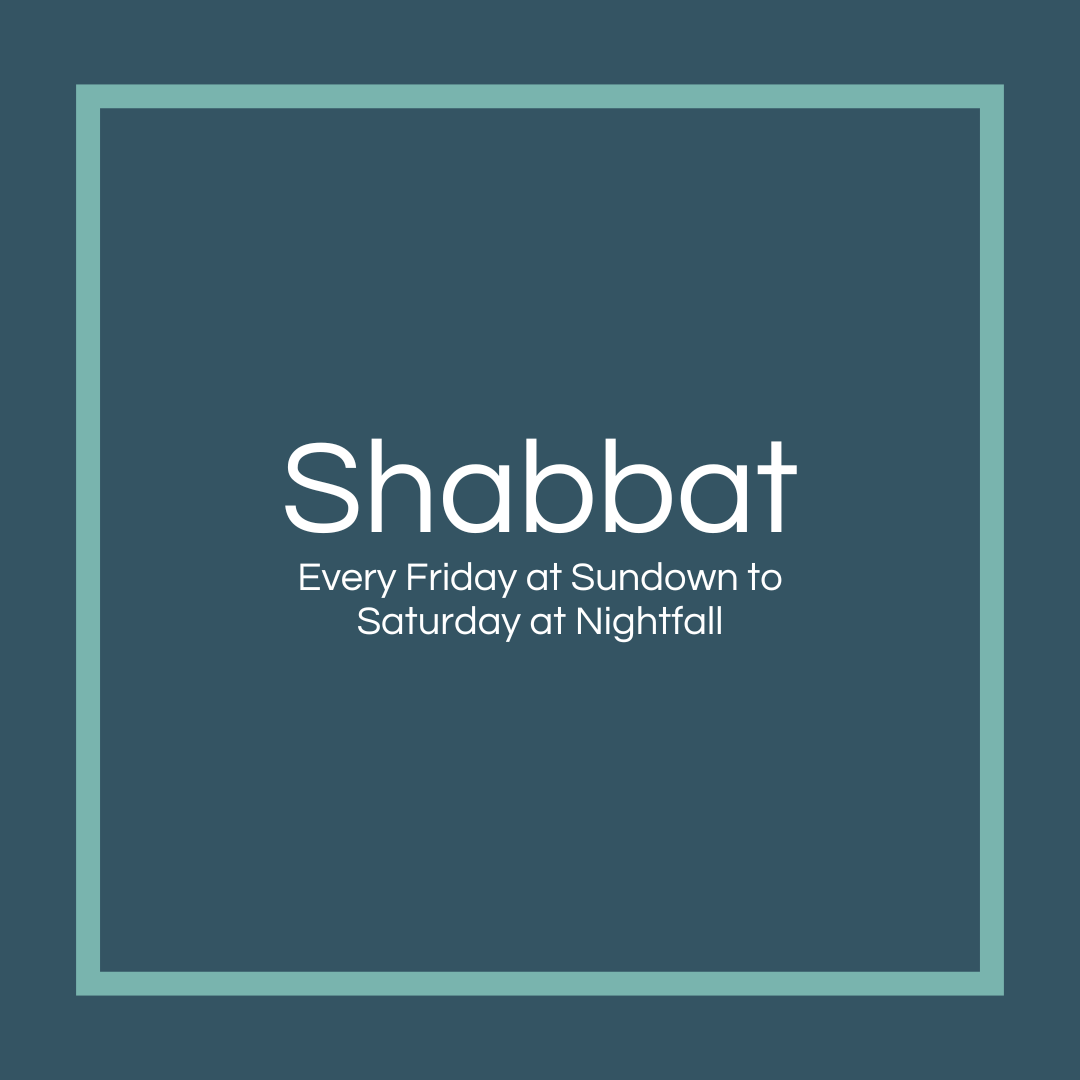
Hebrew name means “Sabbath” - the English word actually came from shabbat!
What’s it about? A day of rest and enjoyment at the end of every week as a parallel to the Biblical story of creation, when God rested on the seventh day. Shabbat traditionally lasts from 18 minutes before sundown on Friday until an hour after sundown on Saturday evening.
Foods: The rule is yummy. It’s traditional to have two loaves of challah, a braided egg bread.
Activities: Shabbat begins with the lighting of candles. There are special synagogue services and blessings to say at meals. The point of Shabbat is not to work. Some use a set of rabbinic legal definitions for what does and doesn’t count as work, and don’t drive, carry money, write or use electricity on Shabbat. Others don’t use these definitions, but take the day off. Wherever one falls on the spectrum of
observance, Shabbat is a great day to hang out with family and friends, eat together, take walks, study Torah, sing songs, read stories, take a nap, and chill out.
Symbols: Candles, challah, wine, and flowers.
Greeting: “Shabbat shalom,” which means “Peaceful Shabbat.”
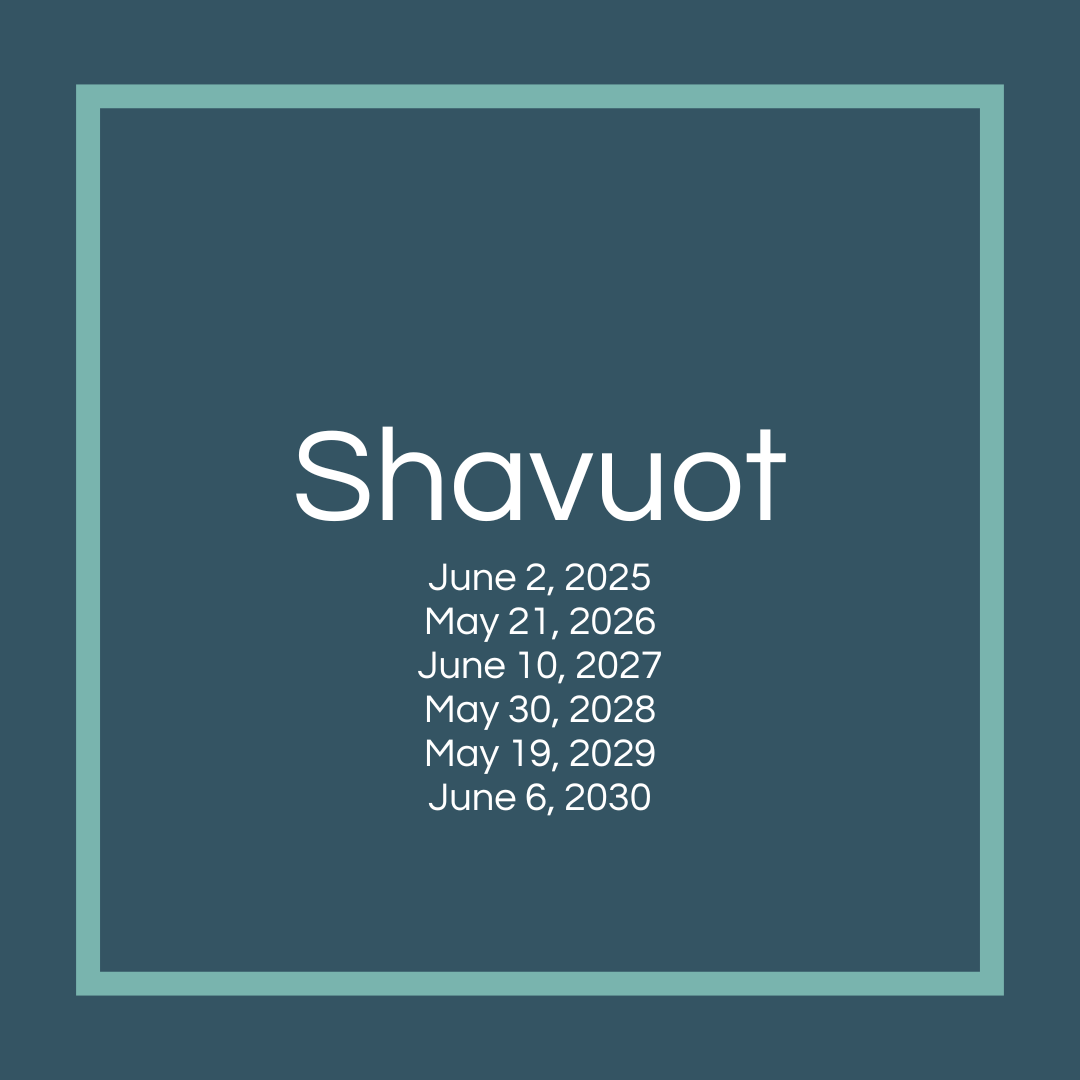
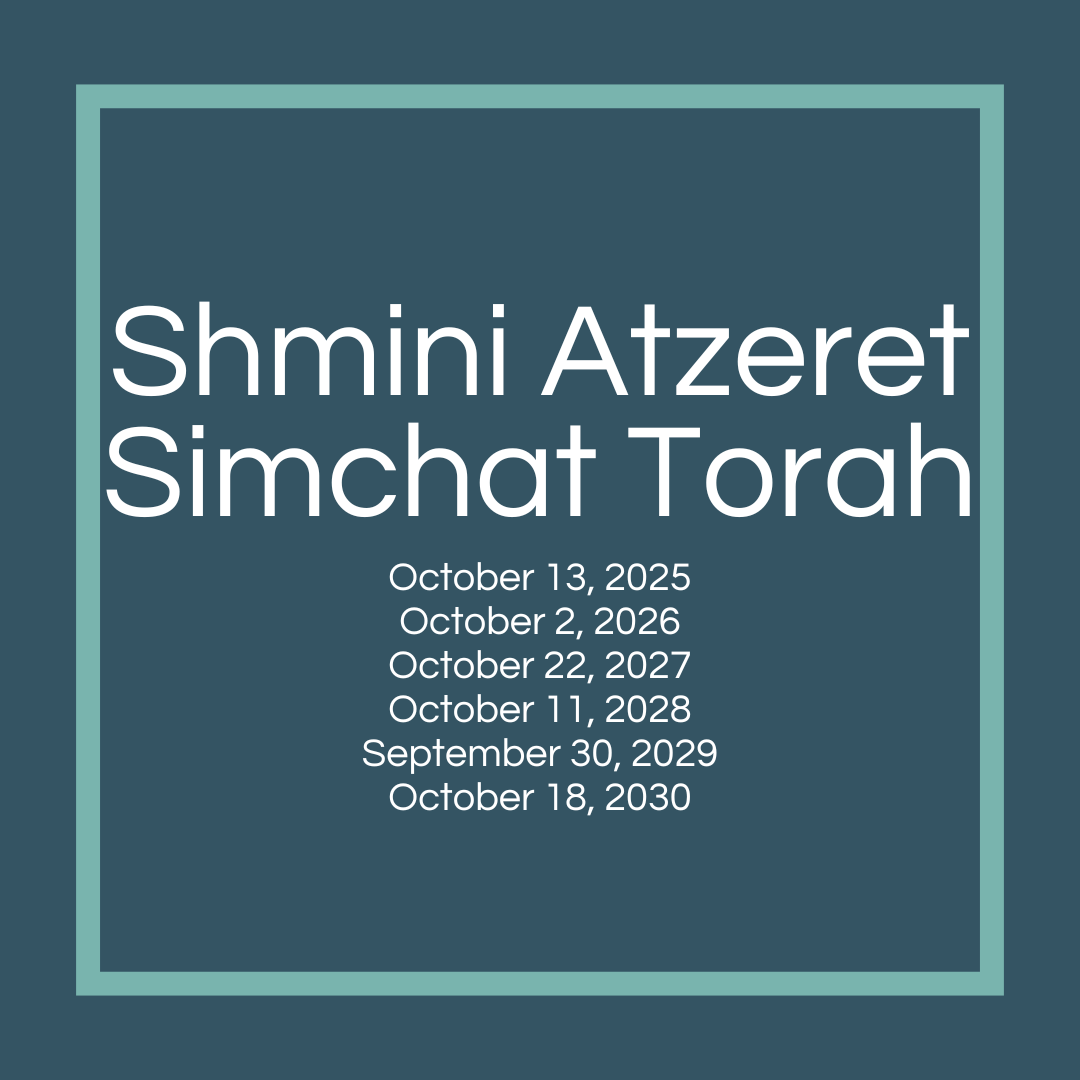
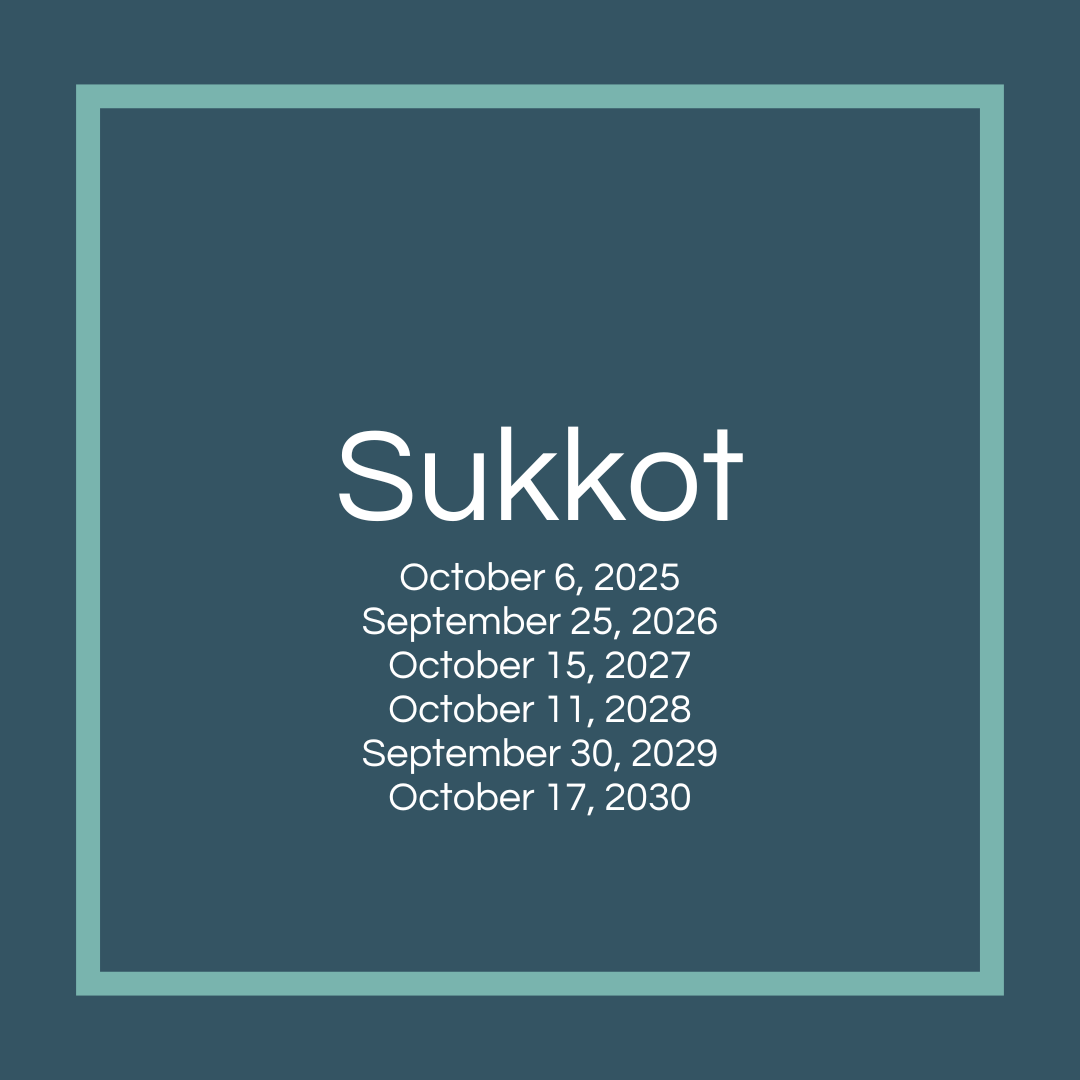
Hebrew name means “booths” or tabernacles. The singular is sukkah.
What’s it about? In ancient times when the Temple stood in Jerusalem, this was a pilgrimage holiday to celebrate the harvest.
Foods: No specific special food, just more big sumptuous meals.
Activities: Before the holiday, communities and some families build a sukkah or temporary hut in their yard. The sukkah is open to the elements, and an important activity is eating in the sukkah. There is also a ritual involving blessing and waving the etrog—a citron—and the lulav—a palm branch bound with myrtle and willow.
Symbols: The sukkah, the lulav and the etrog.
Greeting: “Chag Sameah” or “Happy Holiday.”
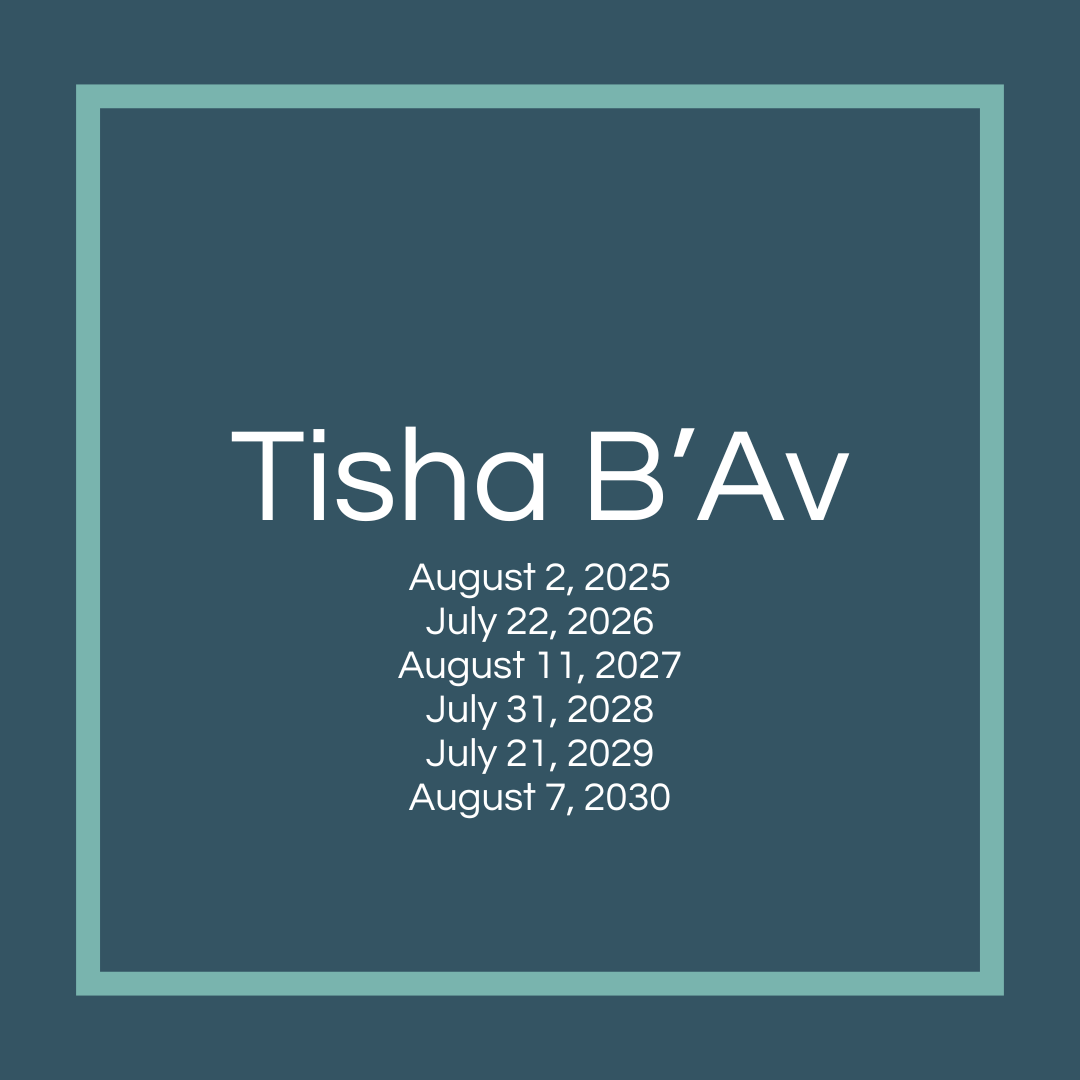
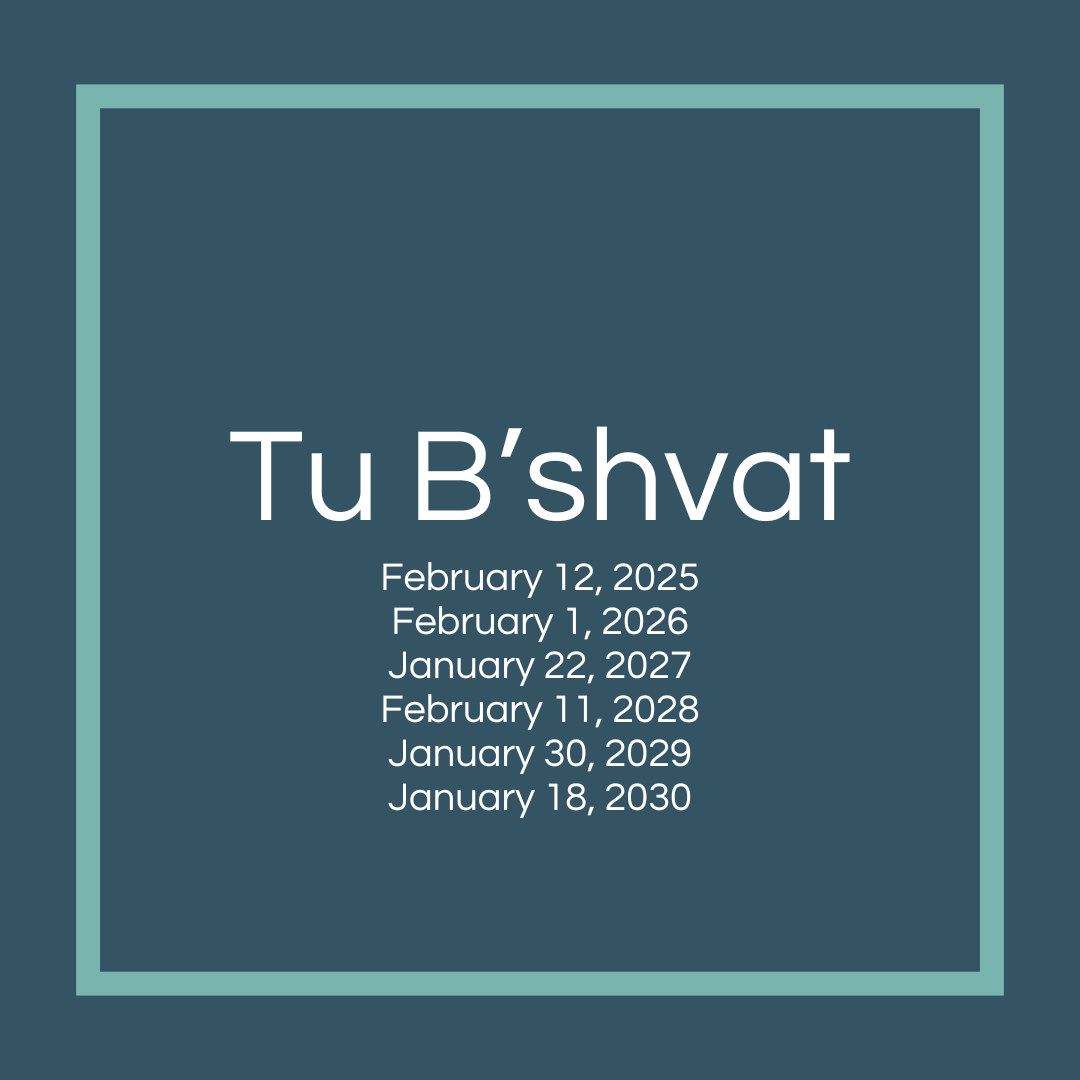
Hebrew name means “15th day of the Hebrew month of Shvat.”
What’s it about? When the Temple in Jerusalem was still standing, first fruits of the trees were offerings made on Shavuot. The trees had to be at least four years old, so you could call Tu B’shvat the official birthday of trees. It’s a great day to recommit to stewardship of the environment.
Foods: Fruit, nuts and other things that grow on or in trees.
Activities: Many have reclaimed the mystical practice of the Tu B’shvat leder, or ritual meal, as an opportunity to explore environmentalist themes in Judaism. Another practice is to plant trees. This is a minor holiday in which work is traditionally permitted.
Symbols: Trees and tree fruit.
Greeting: “Chag Sameah” which means “Happy Holiday.”
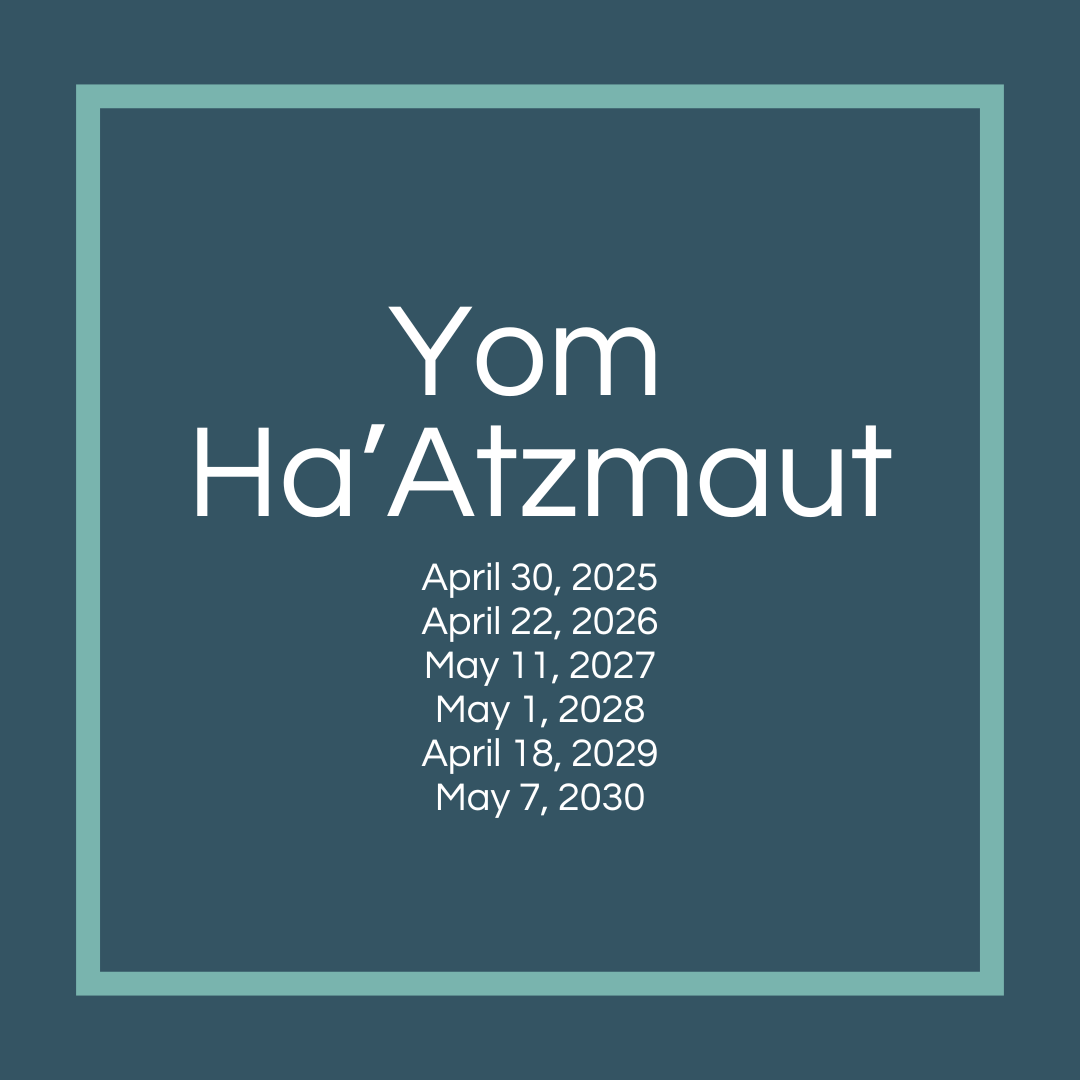
Hebrew name means “Independence Day.”
What’s it about? The modern State of Israel formally declared independence from Great Britain on May 14, 1948. Observance of this holiday is tied to the Hebrew date, Iyar 5.
Foods: This is a good time to get falafel and other Israeli foods.
Activities: In many Jewish communities, it’s the custom to have a fair or other celebration. Some religious Jews add celebratory liturgy to weekday prayers.
Symbols: Israeli flags, music, foods.
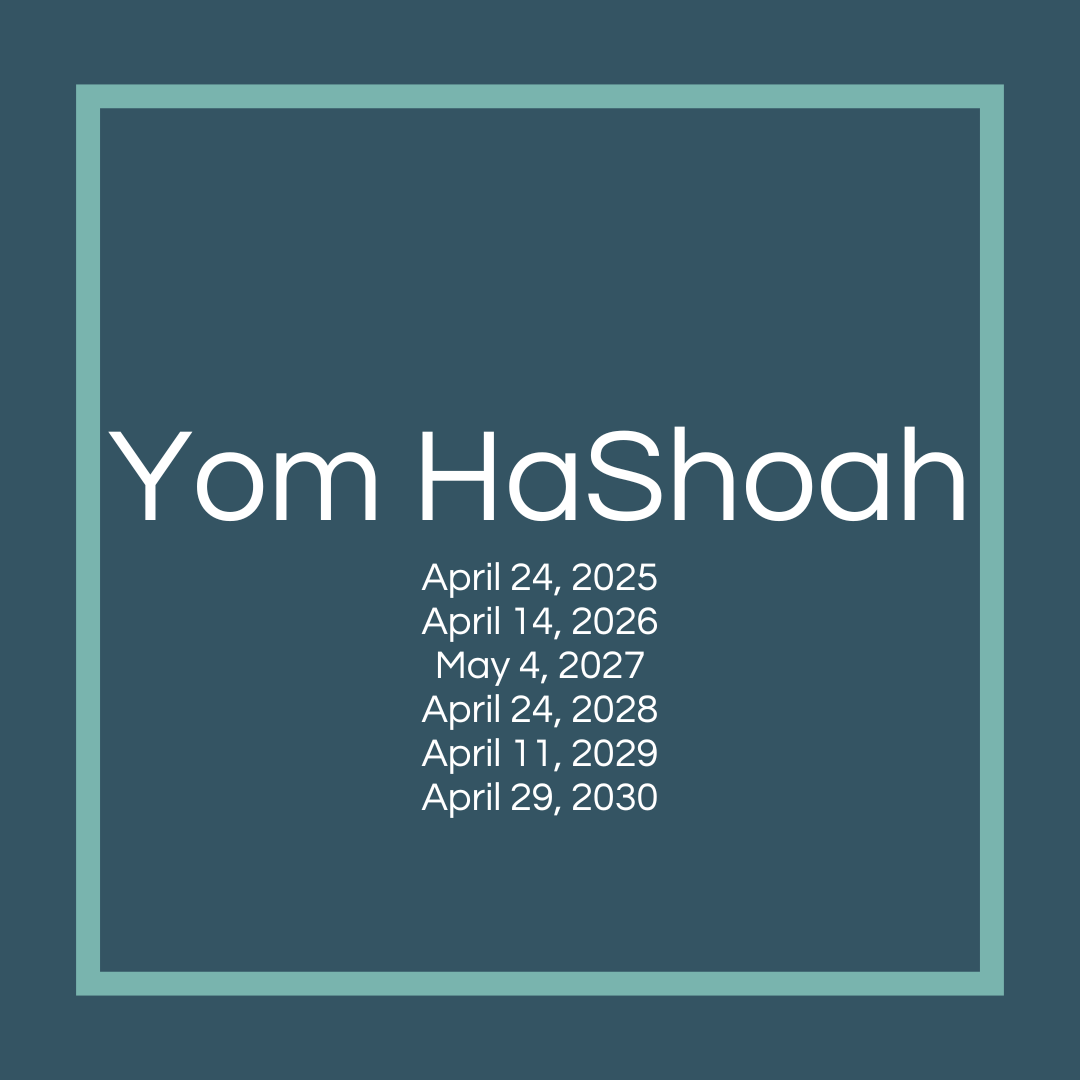
Hebrew name means Holocaust Remembrance Day.
What’s it about? Europeans commemorate the Holocaust on the anniversary of the liberation of Auschwitz, Jan. 27, 1945, but the Israeli government wanted a date that would honor Jewish resistance to the Nazi genocide of World War II. After some debate, the Jewish community as a whole agreed on the 27 of the Hebrew month Nisan, since it was during the period of the Warsaw Ghetto Uprising, an act of Jewish heroism and resistance, but still falls after Passover.
Activities: In many Jewish communities, there are commemorative events. Some light special yahrzeit (annual memorial) candles.
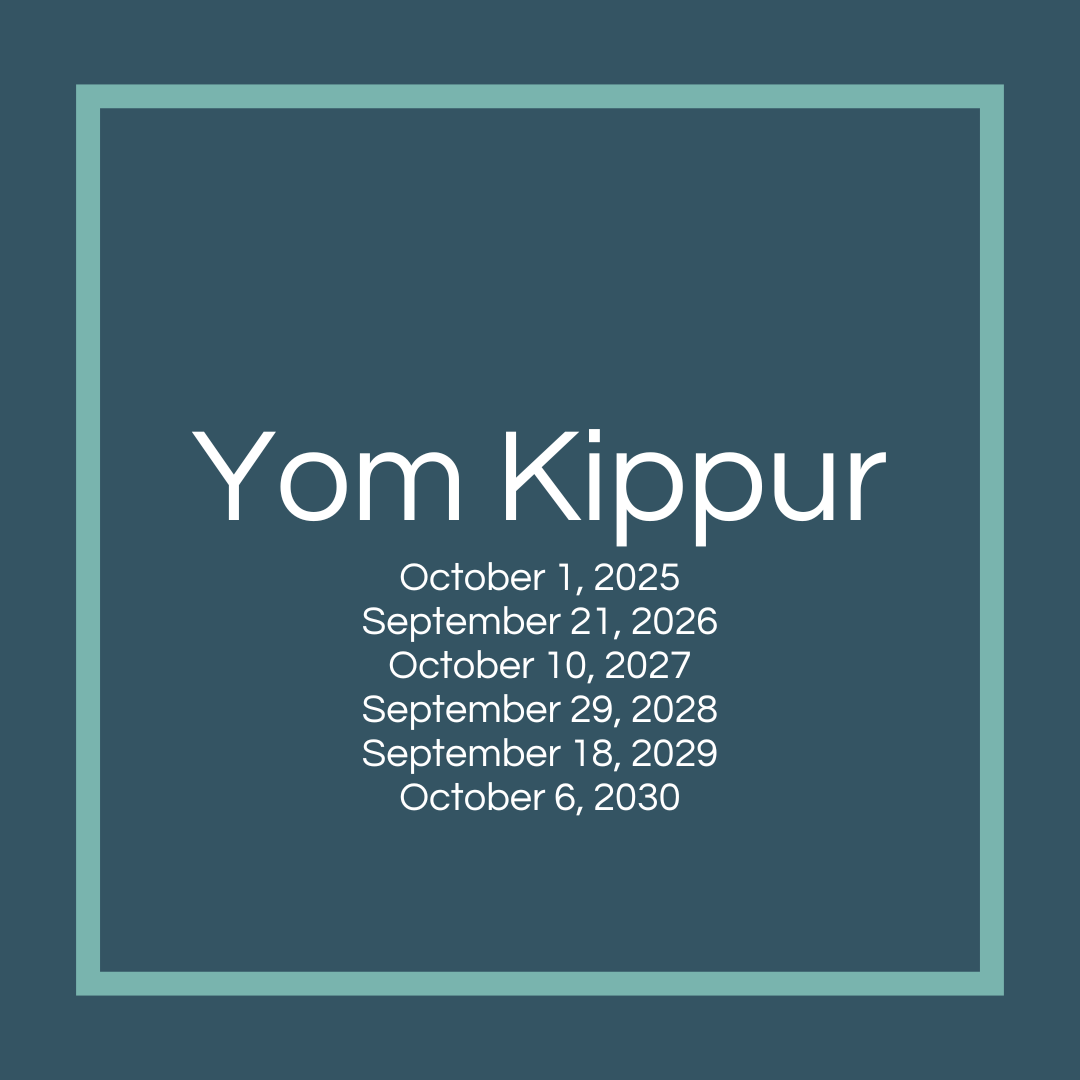
Hebrew name means “Day of Atonement.”
What’s it about? A fast day of prayer, reflection, and repentance.
Foods: None. It’s a fast day!
Activities: There are many prohibitions: not eating, not drinking, not washing, not wearing leather, not engaging in physical intimacy. Traditionally, it is a day spent in synagogue at services.
Symbols: White clothing.
Greeting: You can say “have an easy fast.” Some say “Shanah Tovah”, which is Hebrew for “A good New Year.” The specific greeting for Yom Kippur is “G’mar hatimah tovah” or “A good completion to your inscription in the Book of Life.”
Be Updated,
הצטרפו לניוזלטר שלנו
צרו קשר
We will get back to you as soon as possible.
Please try again later.