Navigating Israel and the Rise of Antisemitism at Brandeis University
By: Dr. Leslie Kirby, CEO at JCA of Southern Maine
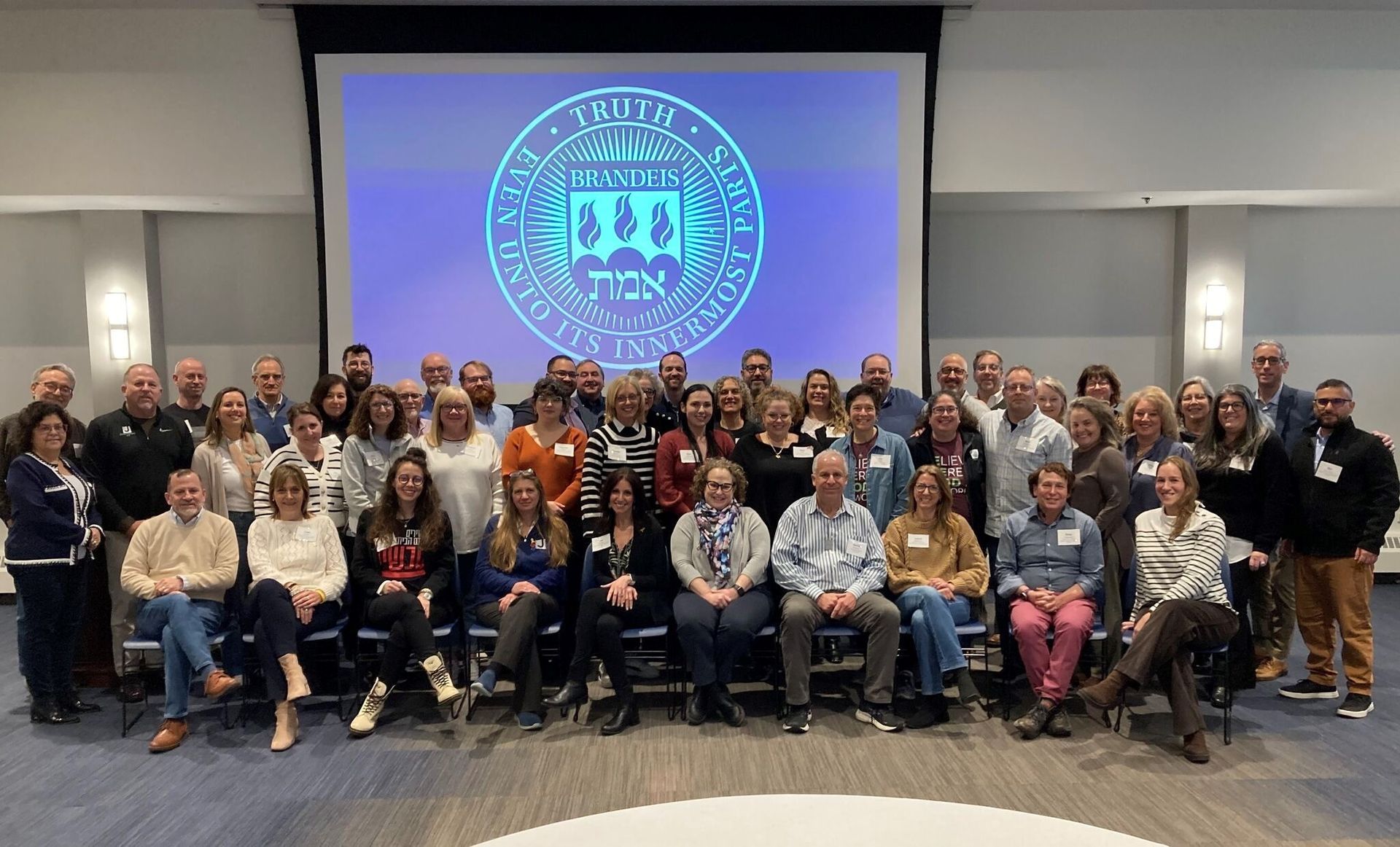
As antisemitism becomes more and more accepted by the mainstream, on both sides of the political aisle, it is vital that the Jewish community band together to address this challenge. I was privileged last week to be part of the 2nd cohort of Navigating Israel and the Rise of Antisemitism at Brandeis University. This influential program, co-sponsored by JCC Association (JCCA) of North America and Boundless Israel, brought together 51 leaders from 25 communities across the US and Canada and equipped us with tools to address antisemitism and growing polarization in our communities.
Coordinated by Rachel Fish,
Ph.D., special advisor to the Brandeis University President’s Initiative on Antisemitism and co-founder of Boundless, the seminar was designed to empower JCC leaders to respond proactively to antisemitism, strengthen understanding and connection to Israel, and implement programming that effectively combats Jew-hatred in their local communities in the wake of the October 7 terrorist attacks in Israel. “The seminar provides not only foundational knowledge but also practical strategies for JCC leaders to engage their communities around the complex intersection of antisemitism and anti-Zionism,” says Fish. “Clearly defining and addressing the challenges of Jew-hatred and anti-Zionism require a systemic approach, and it begins with leadership. By equipping JCC executives with the tools to navigate these issues, we are empowering them to lead with confidence, ensuring the work of countering Jew-hatred and strengthening connections to Israel continues to grow unabated.”
The seminar included practical learning experiences, real-life case studies, and 12 world-class scholars and practitioners from institutions including Brandeis, Conference of Presidents of Major American Jewish Organizations, Constructive Dialogue Institute, Frieze Family Foundation, Hebrew College, JCC Association, Jewish Community Relations Council of Greater Boston, National Black Empowerment Council, Scholars for Peace in the Middle East, Tufts University, and Wilson Center.
One of the most interesting aspects to me was the idea of shifting from using the word “antisemitism” to using the phrase “Jew-hatred”. They presented a lot of really solid data showing that many people in the US don’t know what the word antisemitism means. Calling it Jew-hatred is a lot less ambiguous! It will take a while to break the habit of saying antisemitism, but I will be trying in communications with our community to switch to Jew-hatred. Similarly, a lot of people don’t know what the word Zionism means. Another study presented data that showed that simply defining the word for people increased the reported levels of pro-Zionist ideas. Just another reminder to be clear on defining our terminology in both internal and outward-facing ideas.
We also learned a lot about the history of antisemitism (Jew-hatred), including the origins of tropes, the role of the former Soviet Union in propagating antisemitic views worldwide, and the recent role of Iran in antisemitic communications, especially on social media. It was fascinating to see how things have shifted, or sometimes cycled, over time.
The content was heavy – it’s not an uplifting topic! But it was great to be there, to learn more about the historical and ongoing contexts of antisemitism, to meet so many other execs who are grappling with these issues and have a chance to brainstorm together, and just to sit with all this in a concentrated way. I left with a fabulous network of peers to draw on for ideas, with some strategies I look forward to trying out in our community, and with a lot of hope about the ability of us collectively to respond to the challenges of this moment.