JCA Spotlight
Your Gift, Our Community: How the JCA Allocations Make an Impact
When you give to the JCA’s Annual Campaign, you’re not just supporting the incredible programs and services we offer—you’re investing in a stronger, more connected Jewish community. One-quarter of every dollar raised is distributed by our Allocations Committee, a dedicated group that reflects the diversity and values of our community.
Of these allocated funds, 75% stays local, supporting partners like the Maine Jewish Film Festival, the Southern Maine Jewish Cemetery Association, religious schools across Cumberland, York, and Sagadahoc Counties, and more. The remaining 25% goes overseas to non-governmental organizations providing essential social services, including Hand in Hand Schools and World ORT.
One powerful example of your impact is the Maine Jewish Museum’s Delet program, which introduces Maine middle and high school students of all backgrounds to the richness of Jewish history, culture, and traditions. Thanks to your support, Delet is opening doors to greater understanding.
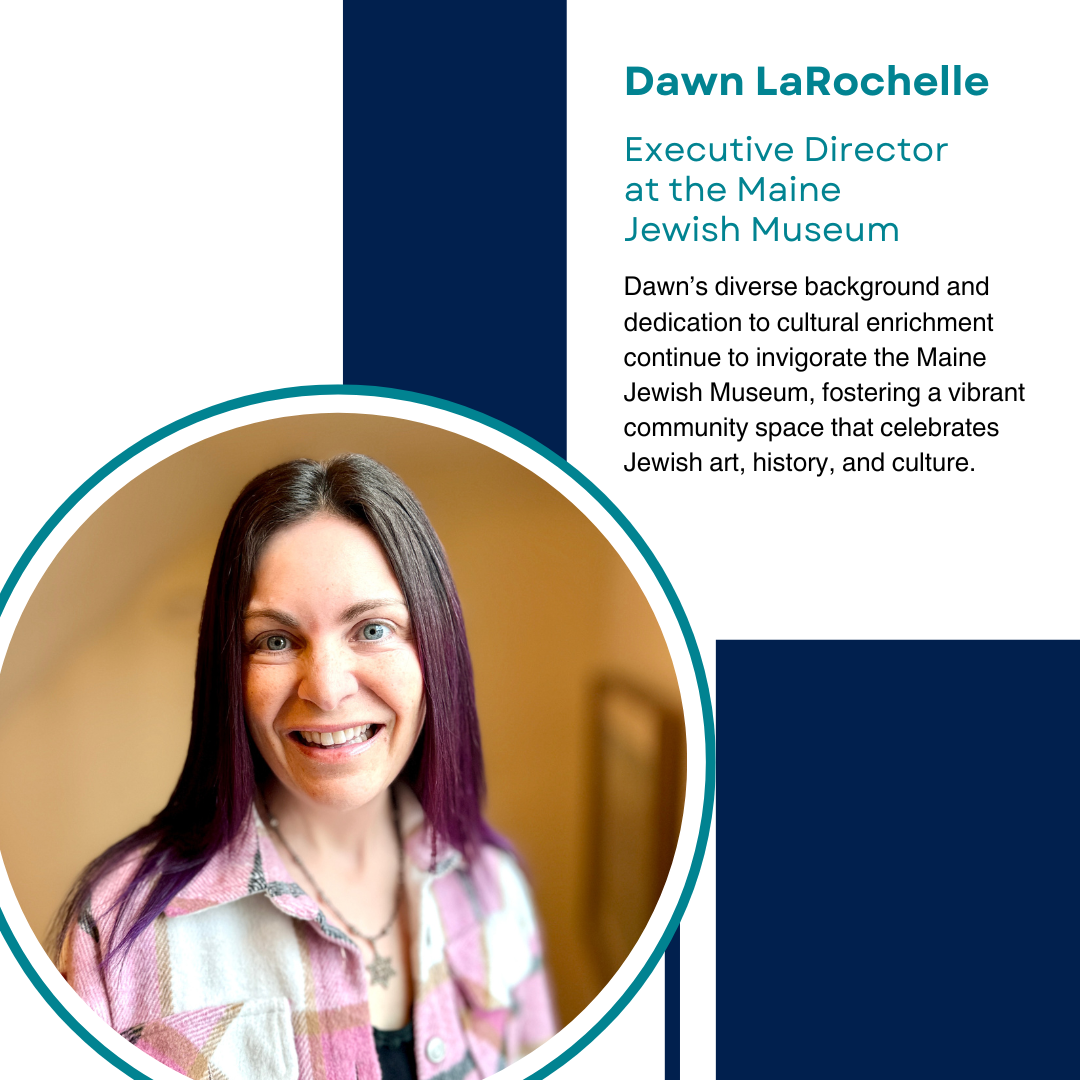
What is the purpose of the Delet Program?
"Delet" is the Hebrew word for "door," and the mission of the Delet Program is to share our experiences and open a door to a greater understanding of Jews and Judaism among diverse Maine middle and high school students. We work one-on-one with teachers at schools throughout the state to custom-design lesson plans that dovetail with their specific teaching goals. We usually take over teachers' classrooms for the day or multiple days in a row, allowing them to be part of the learning experience themselves, if they so choose — as a long-time educator with a Master's degree in teaching, I aim to give our overburdened teachers less work, not more. Sometimes our lessons complement units on the Holocaust, sometimes they highlight Maine Jewish history, and sometimes they focus on Jewish literature and culture. This month, we are teaching a class on Jewish contributions to the Civil Rights movement for the first time. Whatever teachers teach, we are happy to connect to Jewishness in cross-culturally meaningful ways.
We also provide transportation for schools to visit the Maine Jewish Museum for general tours and special programs. We give students an introduction to the synagogue, allowing them to see and touch a Torah, explaining the basic elements of a Jewish service, and outlining the similarities and differences between the Jewish religion and other world religions. We walk them through our historic collections and contemporary art exhibitions and give them an overview of Jewish contributions to Maine's history and vibrant arts community. Our emphasis is on Jewish life and light even when discussing antisemitism — as we always remind students and teachers, Jews are forced to contend with antisemitism, but antisemitism does not define us.
Our Museum Vision calls on us to connect people to the Maine Jewish experience and use our Jewish core as a springboard for broader outreach, and the Delet Program is critical to this mandate. With antisemitism continuing to skyrocket and our society increasingly divided, bridge-building is more important than ever... particularly with our youth, in whose hands our future lies.
How does the JCA’s gift impact the Delet Program, and what is the significance of the Jewish community backing this program through the local allocation process?
The JCA's generous funding allows us to bring the Maine Jewish Museum to schools and schools to the Maine Jewish Museum, as well as to host performances and workshops for students of all backgrounds. Many of the schools we work with are unable to afford transportation for field trips, and being able to cover that cost for them is game-changing. In fact, students are often not only visiting the Maine Jewish Museum for the first time, but they are also visiting Portland for the first time! My educational mantra is "you can't teach them 'til you reach them," and the JCA has gifted us with the opportunity to reach hundreds of young Mainers who have had little or no contact with Jews.
Knowing the Jewish community is putting its dollars and faith in the Delet Program through the local allocations process makes me feel buoyed and supported even as Jews are under siege nationally and in Maine. There are so many nefarious forces beyond my control, but thanks to the JCA, I am able to focus on impactful work on the ground that I can control, and that is everything to me.
With one gift, you change lives. You build a more resilient, vibrant Jewish community. Join us in strengthening our future by supporting the JCA Annual Campaign today.